
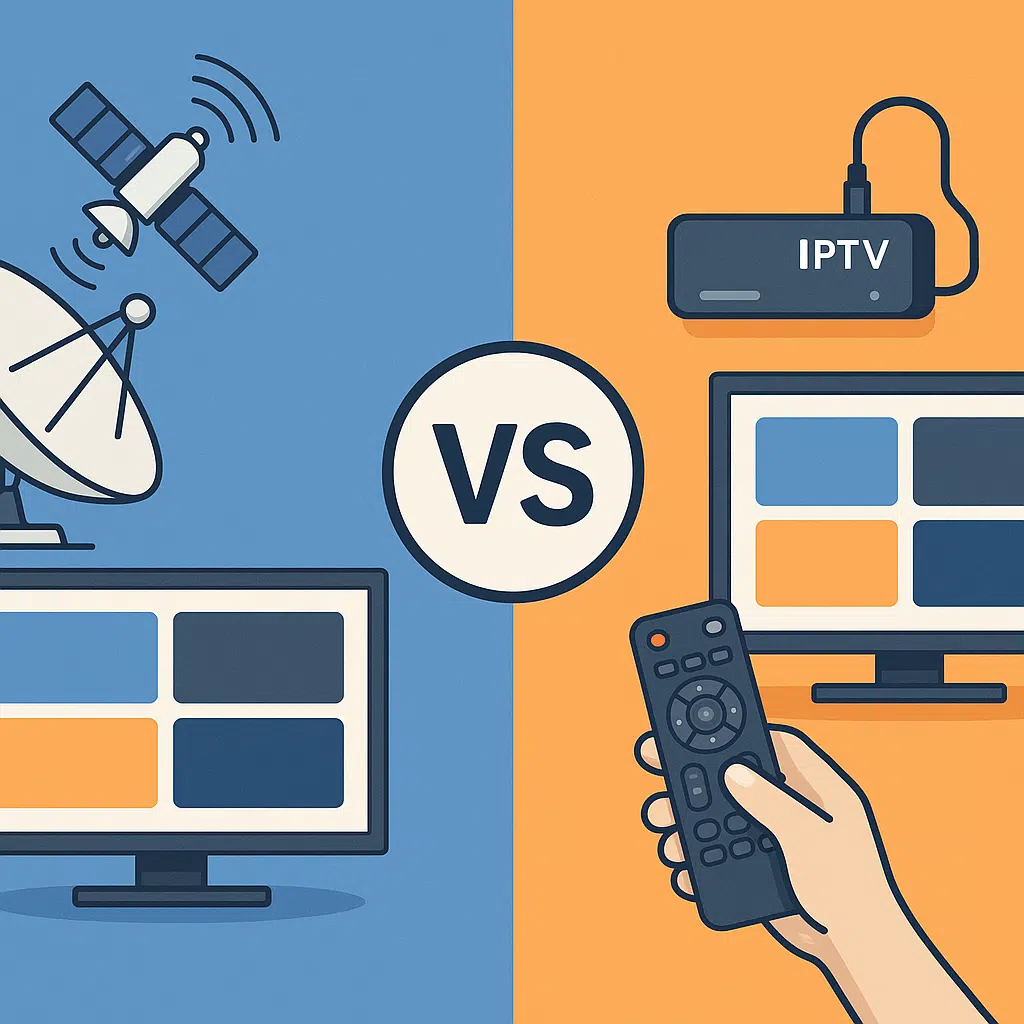
Satellite TV vs IPTV is one of the most common TV questions Canadian households are asking in 2026, especially as more viewers look for flexible, affordable ways to watch live channels, sports, movies, and international programming. At Primestelly, we hear from a lot of viewers who are not trying to become tech experts — they simply want TV that works well, looks good, and fits their home.
The good news is that both satellite TV and IPTV can deliver live television, but they do it in very different ways. Satellite TV uses a dish installed at your home, while IPTV delivers channels through your internet connection. That one difference affects everything: setup, reliability, cost, picture quality, portability, and how many devices you can use.
For many Canadians, the decision is not just about which service has more channels. It is about everyday convenience. Can you watch on a Smart TV in the living room and a tablet in the bedroom? Can you avoid long contracts? Will the picture freeze during a hockey game? Will heavy snow affect your signal? These are the practical questions that matter.
In most cases, IPTV is the more modern and flexible choice for households with stable internet. Satellite TV can still make sense in some rural locations, cottages, or homes where internet speeds are limited. The best answer depends on your address, viewing habits, budget, and comfort level with streaming apps.
This guide explains Satellite TV vs IPTV in plain Canadian terms, with no jargon and no pressure. By the end, you will have a clear sense of which option is better for your household in 2026.
Quick Answer: Satellite TV vs IPTV in 2026
If you want the shortest answer, IPTV is usually better for most Canadian viewers in 2026 because it is more flexible, easier to use on multiple devices, and often provides more entertainment options without the same installation requirements. Satellite TV is still useful when internet service is weak or unavailable, but it is less convenient for viewers who want modern streaming features.
Here is the simple way to think about it:
- Choose IPTV if you have reliable home internet.
- Choose IPTV if you want live TV, movies, series, and international channels in one place.
- Choose IPTV if you want to watch on Smart TVs, Android boxes, Firestick, Apple TV, phones, or tablets.
- Consider satellite TV if your internet is too slow for streaming.
- Consider satellite TV if you live in a remote area with limited broadband options.
- Compare both carefully if you have a cottage, RV, or seasonal home.
A lot of viewers switching from older TV packages are also comparing cable, satellite, and IPTV at the same time. If that sounds like you, Primestelly’s guide to why Canadians switch from cable to IPTV in 2026 is a helpful companion to this article.
The key point is this: satellite TV is built around fixed equipment at one location, while IPTV is built around internet-based access. That difference is why IPTV feels more natural for today’s viewing habits.
How Satellite TV Works in Canada
Satellite TV delivers television signals from satellites orbiting above the Earth to a dish installed outside your home. The dish receives the signal, a cable carries it inside, and a receiver box decodes the channels for your television. It is a long-established system, and many Canadians have used it for years, especially outside major urban centres.
Satellite TV has some familiar strengths. It can deliver a consistent channel lineup, it does not rely on your home internet for the TV signal, and it may be available in areas where cable service is not. For households in rural Canada, that can be valuable.
However, satellite TV also comes with physical installation needs. You usually need:
- A satellite dish mounted outside.
- A clear line of sight toward the satellite.
- Indoor receiver equipment.
- Cabling from the dish to the TV area.
- Professional installation in many cases.
- Possible service visits if alignment changes.
Because satellite depends on outdoor equipment, weather and placement matter. Heavy snow, ice buildup, strong wind, or blocked line of sight can affect performance. In most cases, the service works well when installed properly, but Canadian winters can be tough on any outdoor signal system.
Satellite TV also tends to feel more traditional. You usually watch through set-top boxes connected to specific televisions. Some providers offer apps or extras, but the main experience is still tied to home equipment and package-based channel plans.
How IPTV Works in Canada
IPTV stands for Internet Protocol Television. In simple terms, IPTV delivers live TV channels and on-demand content through your internet connection instead of a cable line or satellite dish. You open an IPTV app on a compatible device, sign in, and stream the channels you want to watch.
If you would like a beginner-friendly foundation before comparing options, this simple guide on what IPTV is in Canada explains the basics in easy language. The short version is that IPTV uses your internet the same way streaming services do, but it focuses on live TV, channels, movies, series, and sometimes catch-up features depending on the provider.
Most IPTV viewers use devices they already understand, such as:
- Smart TVs from Samsung, LG, Sony, or other brands.
- Amazon Firestick or Fire TV devices.
- Android TV boxes.
- Apple TV.
- Chromecast with Google TV.
- iPhones, iPads, Android phones, and tablets.
The benefit is flexibility. You are not relying on a dish, a technician, or a fixed receiver in one room. If your service supports it and your subscription allows it, you may be able to watch in different rooms or on different devices. For families, renters, condo residents, students, and people who move often, that can be a major advantage.
IPTV does depend on internet quality. A weak Wi-Fi signal, overloaded router, or slow plan can cause buffering or freezing. But the good news is that many home network issues are fixable. Primestelly has a full IPTV performance optimization guide for Canada if you want to improve stability before or after choosing a service.
Satellite TV vs IPTV Canada: Key Differences
When comparing Satellite TV vs IPTV, it helps to look beyond the label and compare real-life viewing. Most Canadians care about a few practical things: monthly price, channel choice, picture quality, setup, reliability, device compatibility, and whether the service feels easy after a long day.
Satellite TV and IPTV both deliver entertainment, but they are designed for different eras. Satellite TV grew around fixed home installations and scheduled programming. IPTV grew around internet-connected devices, app-based viewing, and on-demand convenience.
Here is a plain-English comparison:
- Satellite TV uses a dish; IPTV uses the internet.
- Satellite TV is usually location-based; IPTV is often device-based.
- Satellite TV may need professional installation; IPTV is usually self-installed.
- Satellite TV can work without strong internet; IPTV needs reliable internet.
- Satellite TV packages may feel traditional; IPTV can feel more flexible.
- Satellite TV can be affected by weather; IPTV can be affected by network issues.
That does not mean IPTV is perfect or satellite is outdated for everyone. It means each option has strengths. The best choice is the one that matches your home, not just the one that sounds newer.
Cost and Contracts
Cost is one of the biggest reasons Canadians compare Satellite TV vs IPTV. Traditional satellite TV plans often involve equipment, installation, receiver rental, package tiers, add-ons, and sometimes long-term agreements. The advertised monthly price may not include everything you actually pay.
IPTV pricing is often simpler, especially with customer-friendly providers. Many IPTV services are subscription-based, and setup can be done with an app instead of a technician. That can make it easier to test, change, or cancel without feeling locked in. Still, you should always choose carefully, because not every IPTV provider is equal.
When comparing price, look at the full picture:
- Monthly subscription cost.
- Installation or activation fees.
- Receiver or device costs.
- Premium channel add-ons.
- Sports and international packages.
- Contract length and cancellation terms.
- Number of screens or connections included.
In most cases, IPTV can offer better value for viewers who want lots of channels, movies, series, and international content. But value is not only about being cheap. A reliable, well-supported service is worth more than a low price that freezes during important moments.
If you are comparing providers, take a few minutes to read how to choose the right IPTV provider in Canada. It covers important points like support, stability, channel quality, device compatibility, and realistic expectations.
Channels, Picture Quality, and On-Demand
Satellite TV usually offers structured channel packages: basic, sports, movies, news, kids, and international add-ons. This can be easy to understand, but it may also mean paying for packages that include channels you rarely watch.
IPTV often provides a broader mix of live channels, video on demand, and international programming. For multicultural Canadian households, this can be especially appealing. Many families want English and French content, plus channels from South Asia, the Middle East, Europe, Africa, Latin America, or the Caribbean. IPTV can be a practical way to bring that mix together.
Picture quality depends on the provider, your device, and your internet. Good IPTV can offer HD and 4K options where available. Satellite can also provide HD and some high-quality broadcasts, but channel quality may vary by package and receiver.
For viewers who care about sharp sports, movies, and big-screen viewing, consider:
- Whether your TV supports 4K.
- Whether the channel is actually available in HD or 4K.
- Your internet speed and Wi-Fi strength.
- The quality of your streaming device.
- The provider’s server stability.
- Whether your HDMI cable and TV settings are correct.
If 4K is a priority, Primestelly’s article on the best IPTV for 4K streaming in Canada explains what to look for before expecting ultra-sharp results. Not every channel or movie is available in true 4K, so it helps to have realistic expectations.
Reliability, Weather, and Travel
Reliability is where the comparison gets interesting. Satellite TV does not need your home internet to deliver channels, which can be a plus in areas with poor broadband. However, satellite equipment is outside, and Canadian weather can interfere. Heavy snow, freezing rain, ice, storms, and dish misalignment can create issues.
IPTV avoids dish-related problems because it streams through your internet. It is not directly affected by snow on a dish or line-of-sight problems. However, it can be affected by slow internet, weak Wi-Fi, router issues, or high household usage during peak times.
In everyday terms:
- Satellite problems often come from dish, weather, or equipment issues.
- IPTV problems often come from internet, Wi-Fi, or app issues.
- Satellite may be steadier where internet is poor.
- IPTV may be steadier where internet is strong.
- Satellite is tied to one installed location.
- IPTV is often easier to use in multiple rooms or on travel-friendly devices.
If you plan to use IPTV at a second property, cottage, or seasonal place, you may enjoy the flexibility. Primestelly also has a guide on setting up IPTV in a vacation home in Canada, which is helpful for snowbirds, cottage owners, and families who move between homes.
Setup and Equipment: Dish Installation vs App-Based Streaming
Setup is one of the biggest lifestyle differences between satellite TV and IPTV. Satellite TV usually involves physical hardware installed outside and receiver equipment inside. IPTV usually involves installing an app on a device you already own or can buy easily.
With satellite TV, the installation process may include booking an appointment, choosing a dish location, mounting hardware, running cables, connecting receivers, and activating packages. This can be perfectly fine if you own your home and do not mind visible equipment. But it may be harder for renters, condo residents, and people who do not want exterior installation.
With IPTV, setup is typically lighter. In many cases, you can get started with a Smart TV app, Firestick, Android TV box, Apple TV, or similar streaming device. If you are comfortable opening an app and entering login details, you are already most of the way there.
A basic IPTV setup often looks like this:
- Confirm your internet speed is suitable for streaming.
- Choose a compatible device, such as a Smart TV or streaming box.
- Install the recommended IPTV app or player.
- Enter the login details provided by your IPTV service.
- Organize channels, favourites, and settings.
- Test live TV, movies, series, and sports channels.
- Adjust Wi-Fi or picture settings if needed.
If you are just starting out, you may appreciate this IPTV Canada beginner’s streaming roadmap. It walks through the basics without assuming you already know the apps, devices, or streaming terms.
For many households, IPTV setup feels less intimidating than it sounds. The important thing is to choose the right device and a provider that offers clear instructions. The device matters more than people think. A slow, outdated streaming stick can make a good service feel frustrating, while a strong device can make everything smoother.
Internet Speed, Data, and Home Network Needs
Because IPTV depends on your internet connection, speed and stability matter. This is where satellite TV has an advantage for homes with weak internet. If your internet is slow, inconsistent, or heavily capped, satellite may be easier because it does not stream the main TV signal over broadband.
For IPTV, the exact speed you need depends on picture quality, number of devices, and household usage. A single HD stream does not require extreme speed, but multiple streams, 4K content, gaming, video calls, and smart home devices can all add up.
As a practical starting point, think about these factors:
- How many people stream at the same time.
- Whether you watch mostly HD or 4K.
- Whether your TV is close to the router.
- Whether your Wi-Fi has dead zones.
- Whether your internet plan has a data cap.
- Whether other devices are using bandwidth.
For a deeper breakdown, Primestelly’s guide to internet speed for IPTV in Canada is a good next read. It explains what speeds are comfortable for different types of streaming and households.
Data usage is another point to consider. IPTV uses internet data, especially when streaming HD or 4K for many hours. Many Canadian home internet plans are unlimited, but not all. If you have a data cap, it is worth checking how much streaming your household does each month. You can learn more in this plain-language guide to IPTV data usage in Canada.
The good news is that many IPTV performance issues are not caused by the IPTV service itself. They can come from Wi-Fi placement, router age, crowded networks, or too many devices competing at the same time. Simple improvements can help:
- Move the router closer to the main TV.
- Use Ethernet where possible.
- Restart the router occasionally.
- Upgrade an old router.
- Use a 5 GHz Wi-Fi network for nearby devices.
- Reduce background downloads during live sports.
If your Wi-Fi feels unreliable, the guide to improving Wi-Fi for IPTV streaming can help you make your home network more streaming-friendly.
How to Choose Between Satellite TV and IPTV
Choosing between satellite TV and IPTV becomes easier when you match the service to your household instead of chasing the longest channel list. The best option is the one that fits your internet, devices, budget, and viewing style.
Use this simple step-by-step process:
- Check your internet first. If your home internet is reliable and fast enough for streaming, IPTV becomes a strong option. If your internet is weak or capped, satellite may still be worth considering.
- List what you actually watch. Write down sports, news, kids’ channels, movies, series, local content, French channels, and international channels. This helps you avoid paying for packages you do not need.
- Think about your devices. If you want to watch on a Smart TV, Firestick, Android box, tablet, or phone, IPTV is usually more flexible. If you mainly watch one TV in one room, satellite may feel familiar.
- Consider your home type. Renters, condo residents, and people who do not want exterior equipment may prefer IPTV. Homeowners in rural areas may be more open to a satellite dish.
- Compare total cost, not just monthly price. Include installation, equipment, receiver fees, add-ons, support, and cancellation rules.
- Test before committing when possible. A trial or short-term plan can show you how the service performs in your real home, on your real internet, during your normal viewing hours.
- Choose support over hype. A helpful provider is more valuable than a flashy promise. You want clear instructions and someone to help if something goes wrong.
Testing is especially important with IPTV because performance depends on your home setup. Before buying a long plan, read how to test IPTV quality before buying in Canada. A quick test can reveal channel stability, app comfort, picture quality, and whether your internet is ready.
Also, take legitimacy seriously. IPTV itself is a technology, and many legitimate services use it. But as with any popular market, there are poor-quality and questionable sellers. A trustworthy provider should be transparent, responsive, and realistic. Primestelly’s guide on signs of a legit IPTV service in Canada is worth reading before you subscribe anywhere.
Common Mistakes to Avoid
When people compare Satellite TV vs IPTV, the biggest mistakes usually come from rushing. TV is something you use every day, so it is worth taking a little time to choose properly. The right service should make life easier, not create new frustration.
Avoid these common mistakes:
- Choosing only by price. The cheapest option is not always the best value if it freezes, lacks support, or does not include the channels you want.
- Ignoring internet quality. IPTV needs stable internet. If your Wi-Fi is weak, fix that before blaming the service.
- Assuming satellite is weather-proof. Satellite can be reliable, but dishes can still be affected by snow, ice, wind, and alignment issues.
- Buying the wrong device. A low-powered streaming device can make IPTV feel slow even when the service is good.
- Skipping a trial or test. Testing helps you see how channels perform in your actual home.
- Trusting unrealistic promises. Be careful with sellers who promise every channel in the world, perfect 4K on everything, or lifetime access for a tiny fee.
- Forgetting family needs. Kids’ content, parental controls, multiple devices, and easy navigation matter in real households.
IPTV scams and low-quality resellers can confuse viewers who are new to streaming. The good news is that warning signs are usually easy to spot once you know what to look for. Before paying anyone, review how to avoid IPTV scams in Canada.
Another mistake is believing outdated myths. Some people still think IPTV is always illegal, always complicated, or only for tech-savvy users. That is not true. IPTV is simply a delivery method, and the experience can be very simple when you choose a good provider and compatible device. For more myth-busting, see IPTV myths Canadians still believe in 2026.
Final Thoughts
Satellite TV vs IPTV does not have one perfect answer for every Canadian home, but in 2026 the direction is clear: IPTV is usually the better fit for viewers who have reliable internet and want flexibility, strong content variety, app-based viewing, and easier setup across modern devices. Satellite TV can still be useful for remote homes, rural areas, or households with limited internet, but it feels less adaptable for the way many Canadians watch TV today.
If you are leaning toward IPTV, take your time, test quality where possible, and choose a provider that values stability, clear support, and a smooth everyday experience. Primestelly is here to make that transition feel simple and reassuring, whether you are replacing satellite, moving away from cable, or setting up IPTV for the first time.
FAQ
Is IPTV better than satellite TV in Canada?
In most cases, IPTV is better for Canadian households with reliable internet because it is more flexible, easier to set up, and works on many modern devices. Satellite TV can still be better if your internet is too slow or unavailable.
Does IPTV work during bad weather?
IPTV is not affected by snow on a dish because it uses your internet connection. However, if a storm causes an internet outage or power issue, IPTV can be interrupted. A stable internet provider and good home network help a lot.
Can I replace satellite TV with IPTV completely?
Yes, many viewers replace satellite TV with IPTV completely, especially when they can access their favourite live channels, sports, movies, series, and international content. Before switching fully, it is smart to test IPTV on your home internet and preferred device.
What internet speed do I need for IPTV?
The speed you need depends on picture quality and how many people are streaming. A comfortable home internet plan with stable Wi-Fi is usually enough for HD viewing, while 4K and multiple screens need more bandwidth and a stronger network.
Should rural Canadians choose satellite TV or IPTV?
Rural Canadians should decide based on internet quality. If your rural home has strong fibre, cable, fixed wireless, or reliable high-speed internet, IPTV may work very well. If your internet is slow, limited, or unstable, satellite TV may still be the safer choice.


